NPJ dry cleaning · thermal equipment

Furnace and boiler cleaning — the same heat from less gas

Soot and fly ash deposited on the heat transfer surfaces act as an insulating layer: the boiler can only produce the same heat from more fuel. After dry cleaning, efficiency is restored — without water or chemicals, and without stressing the refractory lining.

VCA / SCC certifiedATEX equipment15+ years of experienceAcross the EU
up to 8%
gas savings with clean heat transfer surfaces*

Extra consumption from a 1.5 mm soot layer≈ 4%
Extra consumption from a 3 mm soot layer≈ 8.5%
+20 °C flue gas temperature≈ −1% efficiency
* Industry rules of thumb from the literature. The actual effect shows in the plant's own data: lower pressure drop (ΔP), lower flue gas temperature, reduced gas consumption.
≈ 4%
extra gas from just 1.5 mm of soot
0 litres
of water — the chamotte lining stays dry
0 days
of drying time after cleaning
Vacuum
contaminant removal
The physics

Why does a fouled boiler burn more fuel?

The thermal conductivity of soot and fly ash is a fraction of that of steel. Even in a thin layer, they act as thermal insulation on the outside of the tubes and heat transfer surfaces.
1

Deposits build up

Soot, fly ash and contaminants precipitating from the flue gas settle on the heat transfer surfaces of the furnace chamber and the convection zone.

2

Heat cannot get through

The deposit insulates: the heat of the flue gas escapes through the stack instead of passing through the surface — the flue gas temperature rises.

3

More gas, the same heat

The control system compensates for the lost heat transfer with more fuel: the gas bill rises and efficiency deteriorates.

According to the literature, soot insulates five times better than asbestos — a 3 mm layer alone requires about 8.5% extra fuel. The flue gas temperature is the boiler's “thermometer”: if it runs 20–40 °C above normal, the difference is paid on the gas bill.
Payback

What is a clean boiler worth?

Set your annual fuel cost and the estimated savings — the cleaning typically pays for itself within the first heating season.
4%
2% — light fouling8% — heavy fouling
Estimated savings
2 000 000 HUF
per year, at the post-cleaning efficiency
Indicative estimate, depending on the degree of fouling, the boiler type and the operating regime. The actual effect shows in the plant's own data: lower ΔP and flue gas temperature, reduced consumption.
The most important argument

In furnaces with chamotte lining, water itself is the risk

The refractory chamotte (firebrick) lining absorbs moisture: after wet cleaning it needs days of controlled dry-out — otherwise the moisture trapped in the lining can cause a steam explosion during heat-up. Dry technology eliminates this entire category of risk.

Wet cleaning with a chamotte lining

  • The lining and the insulation become soaked
  • Days of controlled dry-out — lost production
  • Risk of steam explosion from moisture trapped in the lining
  • Shorter lining service life (cracking, spalling)
  • Contaminated water as waste

NPJ dry cleaning

  • The lining stays dry throughout
  • No drying time — the furnace can be restarted right after cleaning
  • Steam explosion risk eliminated
  • We clean only the tube surfaces — the lining is untouched by the cleaning
  • The removed deposits are extracted with a vacuum pump — a clean work area
Where it applies

What do we clean with the dry technology?

Any thermal equipment where deposits cause efficiency loss — without damaging the lining or the base material.

Which boilers does it work on?

Complete flue-gas-side cleaning of gas-, oil- and mixed-fired industrial boilers.

  • Steam and hot water boilers
  • Convection zone
  • Economisers (feedwater preheaters)
  • Air preheaters (LUVO)
  • Furnace chamber surfaces

Which furnaces?

Deposit removal from refractory-lined furnaces without wetting or damaging the lining.

  • Refinery tube furnaces
  • Pyrolysis and reformer furnaces
  • Annealing and heat treatment furnaces
  • Radiant and convection zones
  • Combustion chambers, flue gas passes

Which related equipment?

Along the entire flue gas path, from the furnace chamber to the stack.

  • Heat recovery steam generators (HRSG)
  • Flue gas/water heat exchangers
  • Gas engine heat recovery units
  • Flue gas ducts
  • Areas around filters and separators
How we work

Fitted into your planned shutdown

Furnace and boiler cleaning takes place during a shutdown. We work with a self-sufficient crew, and since there is no wet after-work and no drying time, the equipment can be restarted right after cleaning.

Assessment

On-site survey: type and extent of the deposits, access points, and HSE requirements — coordinated to fit the shutdown schedule.

NPJ dry cleaning

The deposits are removed with a biodegradable, non-corrosive abrasive — without water, protecting the lining and the tubes.

Vacuum removal

The removed deposits are collected and extracted with a vacuum pump — no dust or debris is left in the equipment.

Clean handover

After a visual inspection, the work area is handed over clean — the furnace can be fired up without drying, and the result shows in the operating data (ΔP, flue gas temperature).

What you get

Why dry boiler cleaning

Unlike wet and chemical washing, the dry technology puts neither the refractory lining nor the insulation at risk.
  • Lower gas consumption — efficiency is restored with a clean surface
  • No water — the chamotte lining and the insulation stay dry
  • No drying time and no steam explosion risk — shorter shutdown
  • Non-corrosive, biodegradable abrasive — no chemical waste
  • Lower flue gas temperature, lower CO₂ emissions
  • Cleaning of the convection zone without dismantling
  • Vacuum pump contaminant removal — clean handover
  • Self-sufficient crew — no plant utilities required
Typical deposits

What we find in boilers — and why it is a problem

The type of deposit determines the cleaning method — we identify it during the assessment. We clean the flue-gas-side (external) surfaces.
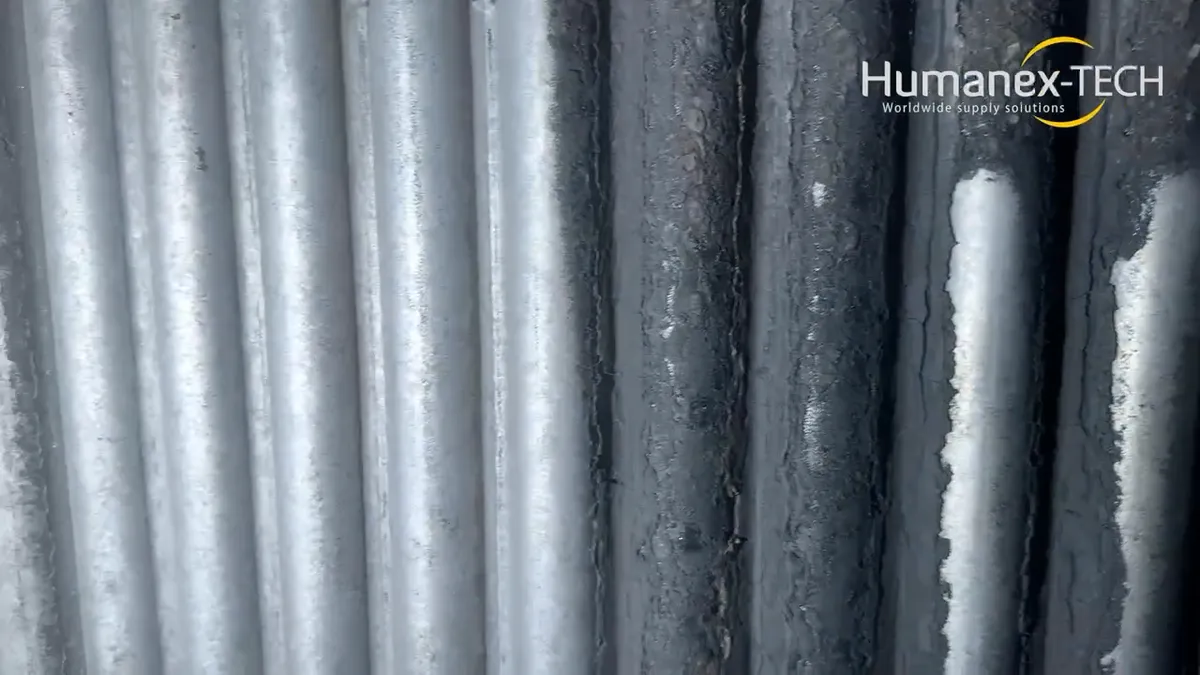
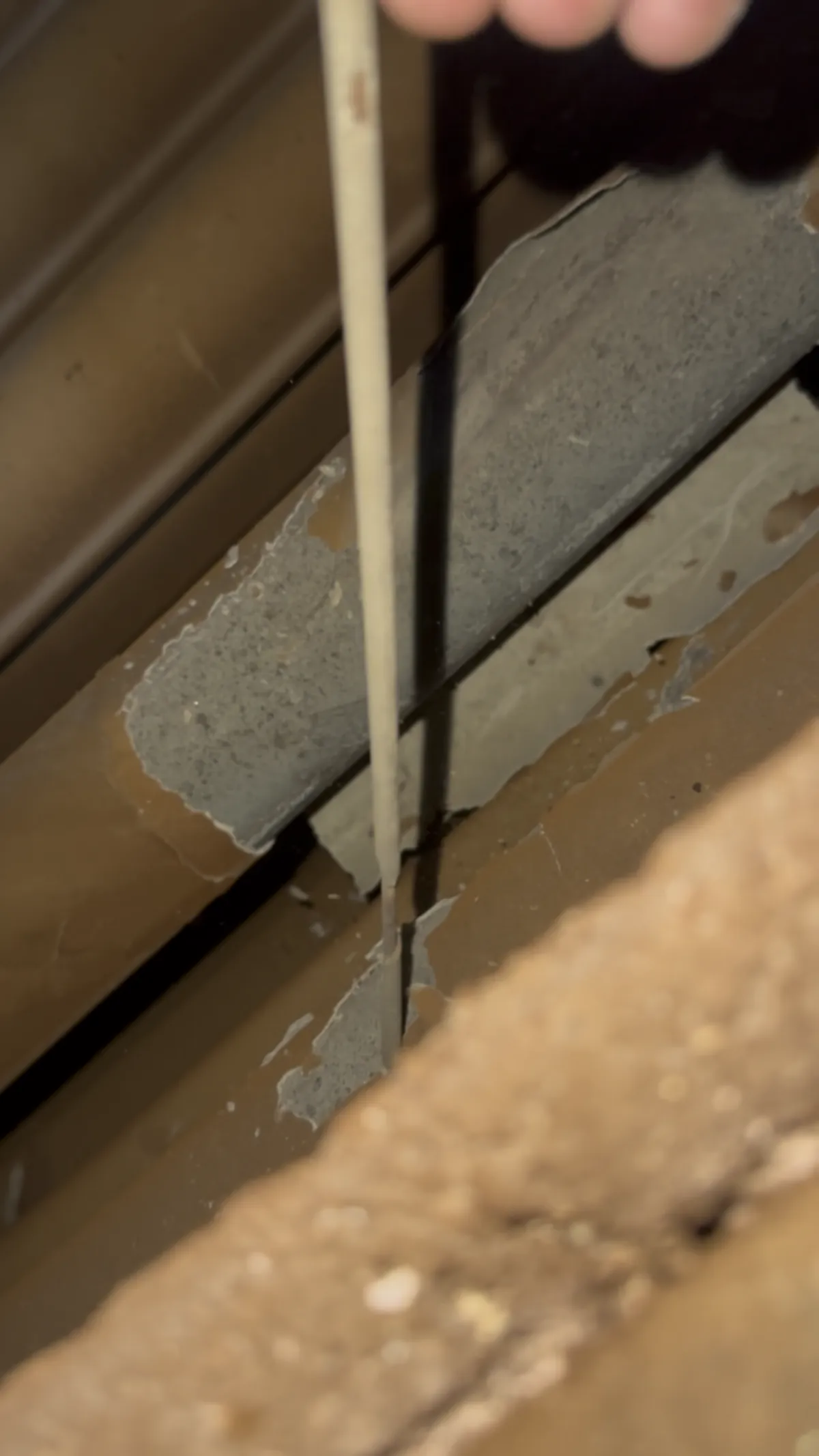
Fly ash and ash deposits in the convection zone of a boiler
Fly ash and ashIt clogs the gaps between the tubes of the convection zone: draught and heat transfer deteriorate, while pressure drop (ΔP) and flue gas temperature rise.
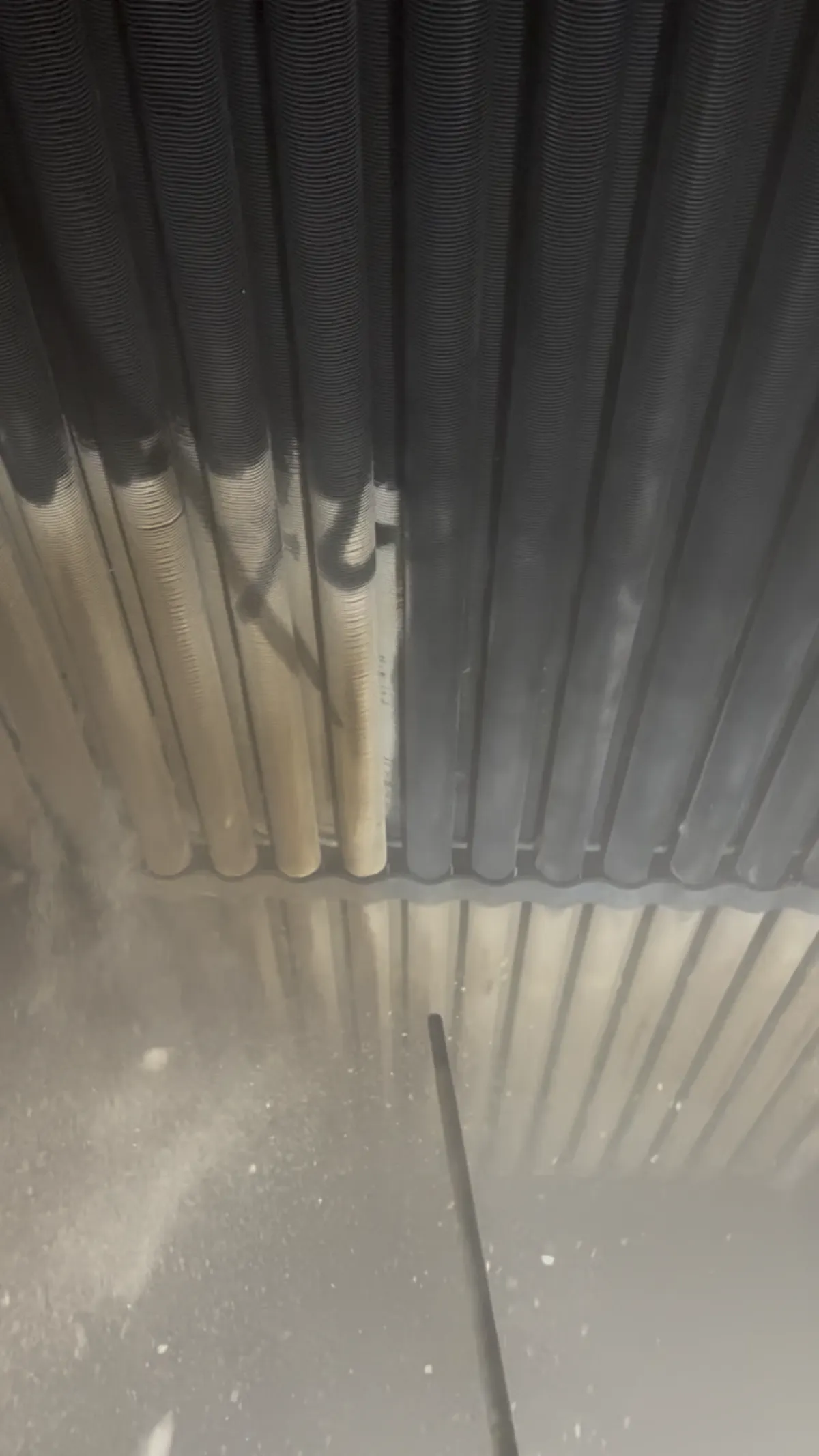
Layer of contaminants precipitated from the flue gas on finned tubes — the light section already dry-cleaned
Contaminants precipitating from the flue gasThe layer precipitating from the flue gas onto the heat transfer surfaces gradually thickens and, acting as thermal insulation, degrades efficiency — in the photo, the light section has already been cleaned.
Baked-on combustion residue on the boiler wall tubes — the light section already dry-cleaned
Baked-on combustion residue on the wallThe layer baked onto the wall tubes degrades heat transfer — in the photo, the light tubes have already been cleaned. Dry cleaning removes it without damaging the surface.
Frequently asked questions

Boiler cleaning — what plant operators ask

How much gas can boiler cleaning save?

Typically 2–8%, depending on the degree of fouling. According to the literature, a soot layer of just 1.5 mm causes about 4% extra consumption and a 3 mm layer about 8.5%, because soot insulates five times better than asbestos. The improvement can be tracked in the plant's own data: lower flue gas temperature and pressure drop (ΔP), and reduced consumption at the same heat demand.

How do I know that my boiler is fouled?

The best indicators are your own operating data: a flue gas temperature 20–40 °C above normal at the same load, an increasing pressure drop (ΔP) across the convection zone, and rising gas consumption at the same heat demand.

Why is wet cleaning risky in a furnace with chamotte lining?

Chamotte absorbs moisture: after wet cleaning, the lining must be dried out over days of controlled heat-up, otherwise the moisture trapped in the lining can cause a steam explosion. With dry cleaning, the lining stays dry throughout — no drying time and no steam explosion risk.

Will the refractory lining be damaged during cleaning?

Not with professional cleaning: the cleaning is directed at the tube surfaces, and the chamotte lining is untouched by the cleaning itself — and there is no water that could seep into the lining or the insulation.

Can the furnace or boiler be cleaned during operation?

No — furnace and boiler cleaning is carried out during a planned shutdown. The shutdown time, however, is shortened by the fact that the dry technology involves no wet after-work and no drying time: the equipment can be fired up right after cleaning.

What happens to the removed deposits?

They are collected with a vacuum pump and extracted from the equipment — no dust or debris is left between the tubes or in the furnace chamber. The abrasive is biodegradable and non-corrosive, so no hazardous waste is generated.

How often should a boiler be cleaned?

Typically once per heating season, before the season starts — based on the assessment, we provide a site-specific recommendation for the cleaning interval.

Gas bill rising at the same heat demand? Let's take a look at the boiler.

Tell us the type of your boiler or furnace — we will assess it and show you the savings potential in numbers.

Request a quote →
Get in touch
Let's talk

Tell us what you're working with — our engineers will propose the right solution.