- +36 30 411 3455
- info@humanex-tech.com

Soot and fly ash deposited on the heat transfer surfaces act as an insulating layer: the boiler can only produce the same heat from more fuel. After dry cleaning, efficiency is restored — without water or chemicals, and without stressing the refractory lining.
Soot, fly ash and contaminants precipitating from the flue gas settle on the heat transfer surfaces of the furnace chamber and the convection zone.
The deposit insulates: the heat of the flue gas escapes through the stack instead of passing through the surface — the flue gas temperature rises.
The control system compensates for the lost heat transfer with more fuel: the gas bill rises and efficiency deteriorates.
Complete flue-gas-side cleaning of gas-, oil- and mixed-fired industrial boilers.
Deposit removal from refractory-lined furnaces without wetting or damaging the lining.
Along the entire flue gas path, from the furnace chamber to the stack.
On-site survey: type and extent of the deposits, access points, and HSE requirements — coordinated to fit the shutdown schedule.
The deposits are removed with a biodegradable, non-corrosive abrasive — without water, protecting the lining and the tubes.
The removed deposits are collected and extracted with a vacuum pump — no dust or debris is left in the equipment.
After a visual inspection, the work area is handed over clean — the furnace can be fired up without drying, and the result shows in the operating data (ΔP, flue gas temperature).
Unlike wet and chemical washing, the dry technology puts neither the refractory lining nor the insulation at risk.
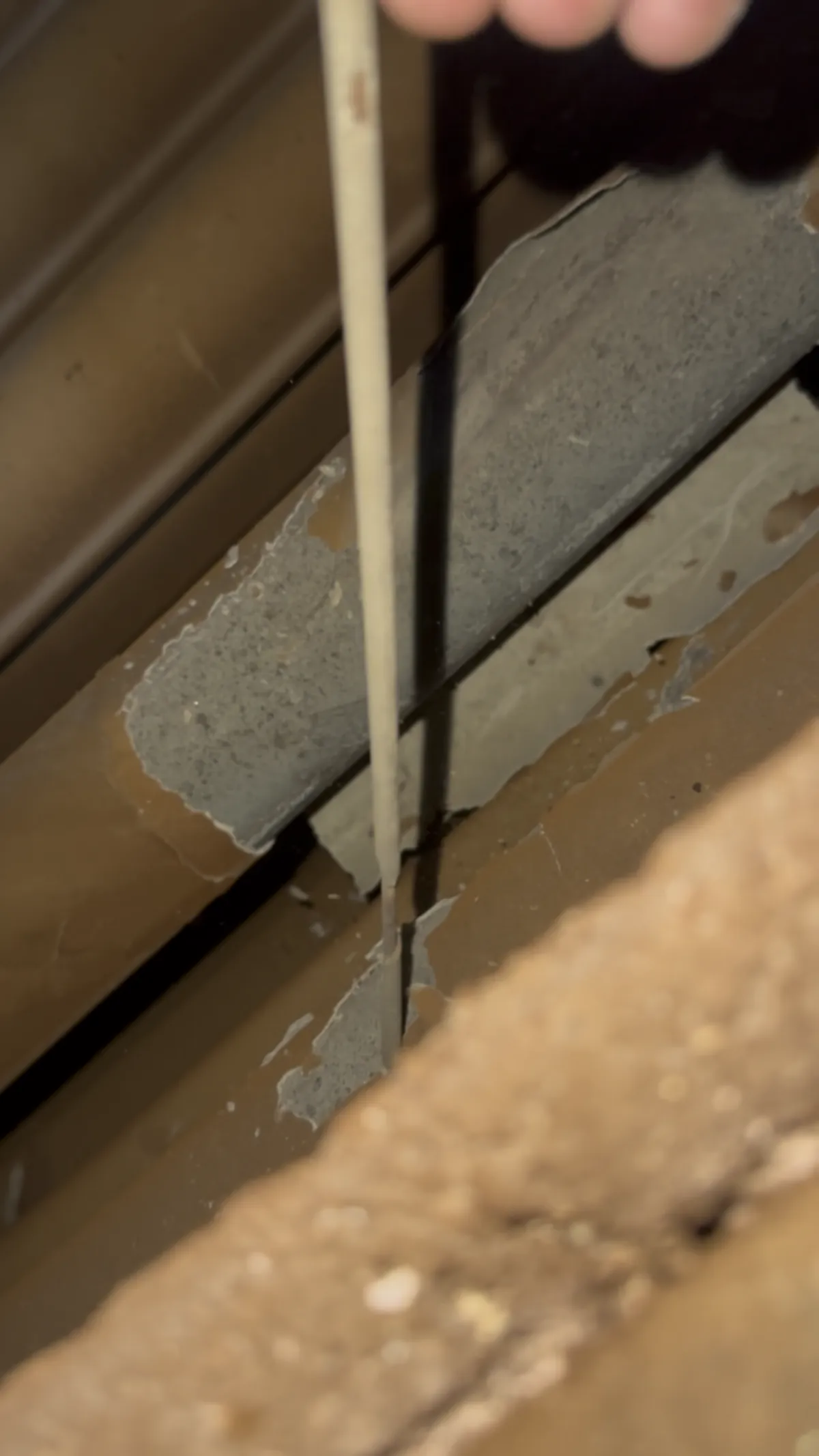
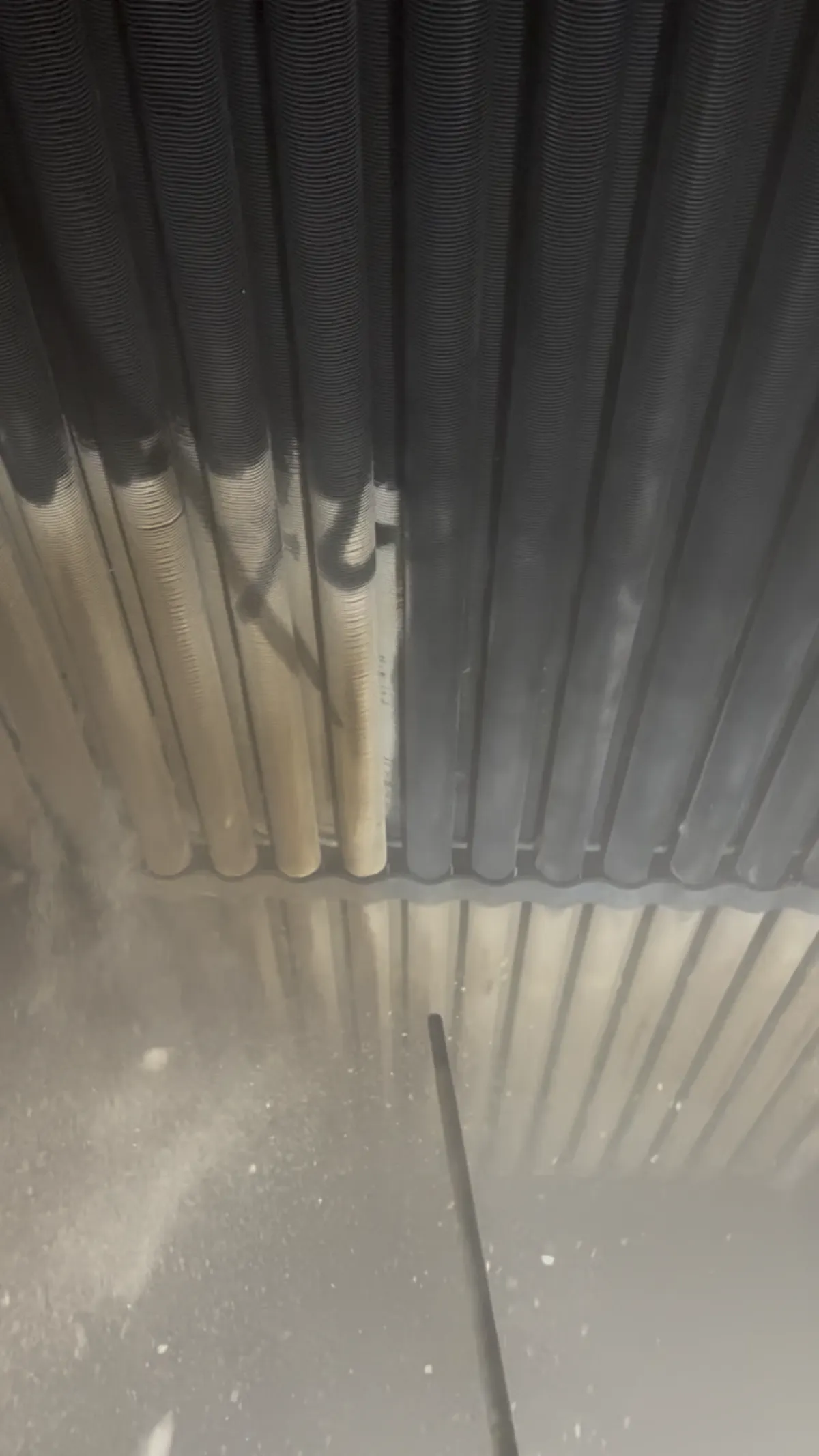
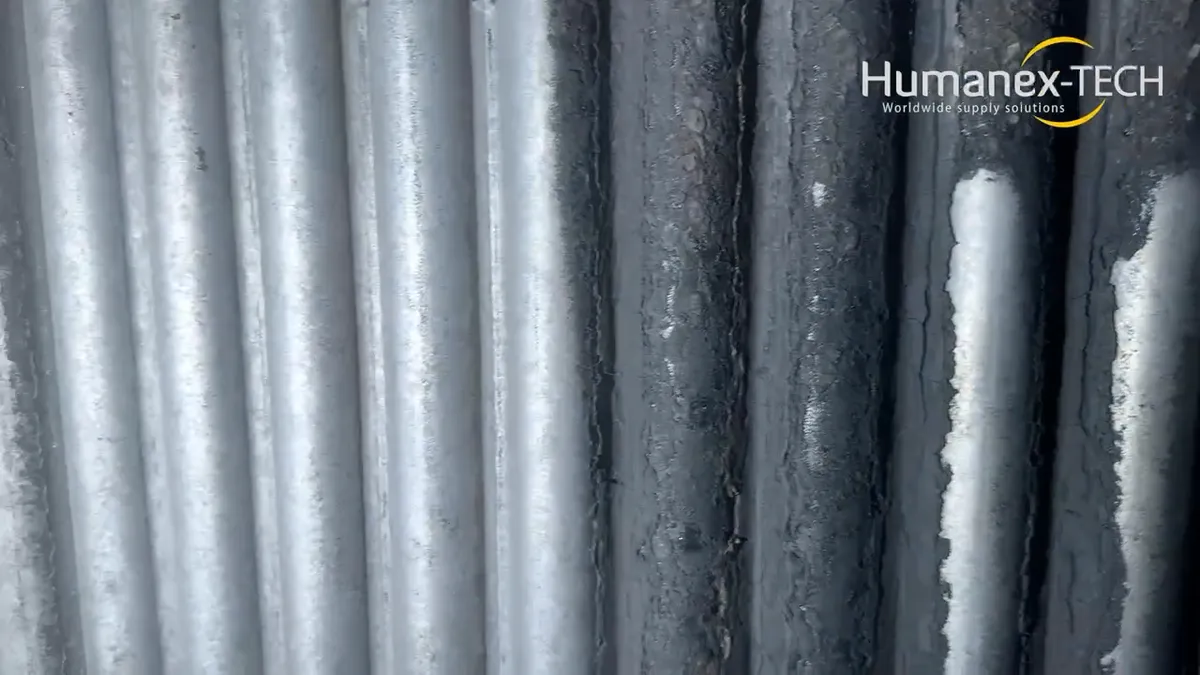
Typically 2–8%, depending on the degree of fouling. According to the literature, a soot layer of just 1.5 mm causes about 4% extra consumption and a 3 mm layer about 8.5%, because soot insulates five times better than asbestos. The improvement can be tracked in the plant's own data: lower flue gas temperature and pressure drop (ΔP), and reduced consumption at the same heat demand.
The best indicators are your own operating data: a flue gas temperature 20–40 °C above normal at the same load, an increasing pressure drop (ΔP) across the convection zone, and rising gas consumption at the same heat demand.
Chamotte absorbs moisture: after wet cleaning, the lining must be dried out over days of controlled heat-up, otherwise the moisture trapped in the lining can cause a steam explosion. With dry cleaning, the lining stays dry throughout — no drying time and no steam explosion risk.
Not with professional cleaning: the cleaning is directed at the tube surfaces, and the chamotte lining is untouched by the cleaning itself — and there is no water that could seep into the lining or the insulation.
No — furnace and boiler cleaning is carried out during a planned shutdown. The shutdown time, however, is shortened by the fact that the dry technology involves no wet after-work and no drying time: the equipment can be fired up right after cleaning.
They are collected with a vacuum pump and extracted from the equipment — no dust or debris is left between the tubes or in the furnace chamber. The abrasive is biodegradable and non-corrosive, so no hazardous waste is generated.
Typically once per heating season, before the season starts — based on the assessment, we provide a site-specific recommendation for the cleaning interval.
Tell us the type of your boiler or furnace — we will assess it and show you the savings potential in numbers.
Tell us what you're working with — our engineers will propose the right solution.