NPJ dry cleaning · during operation

Air Cooler Cleaning During Operation

Online finned-tube cleaning with NPJ dry technology — no water, no aggressive chemicals, no shutdown. The cooler returns to near-factory capacity, and fan energy demand drops by 15–20%.

VCA / SCC certifiedATEX equipment15+ years of experienceEU-wide
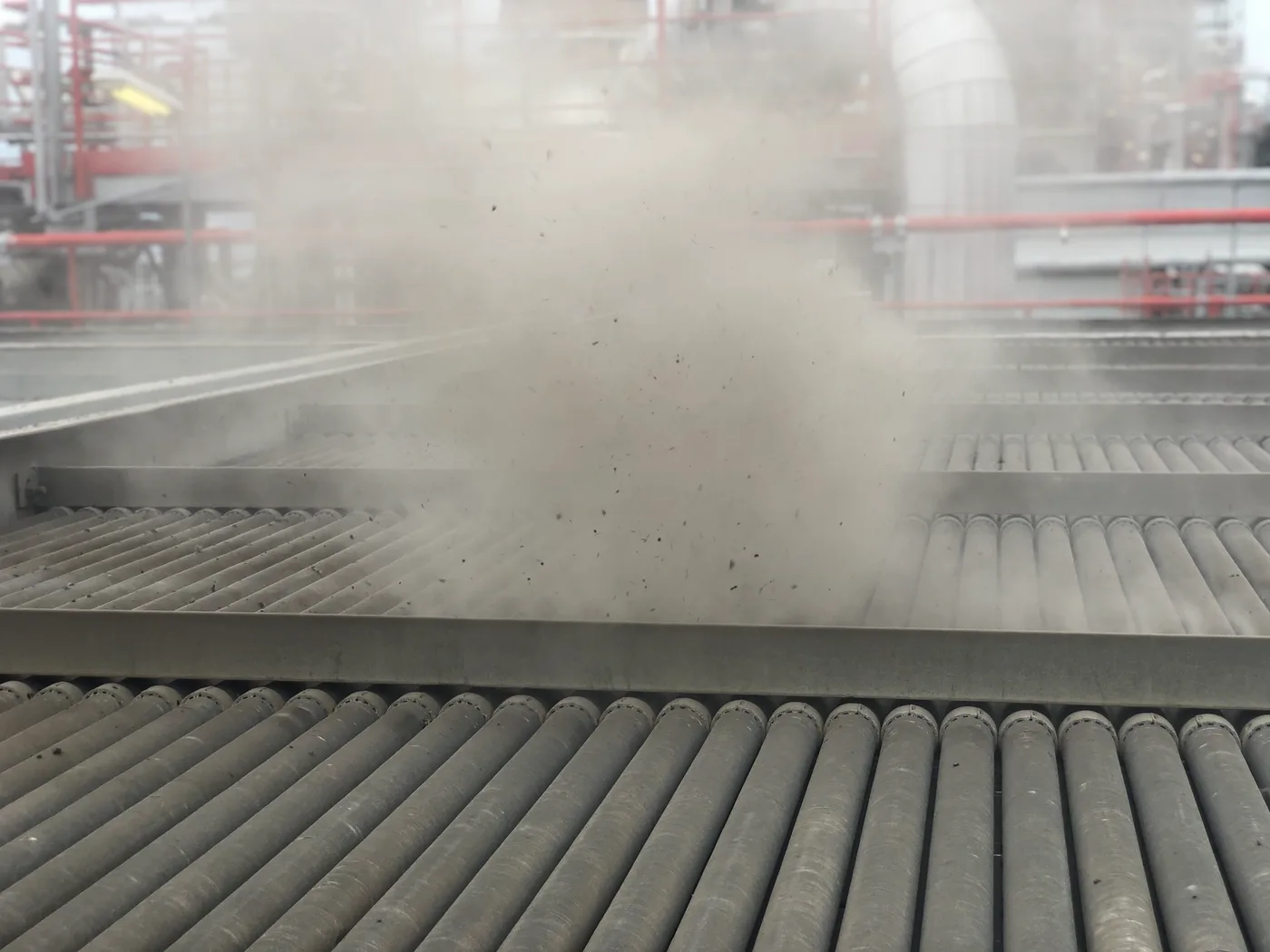
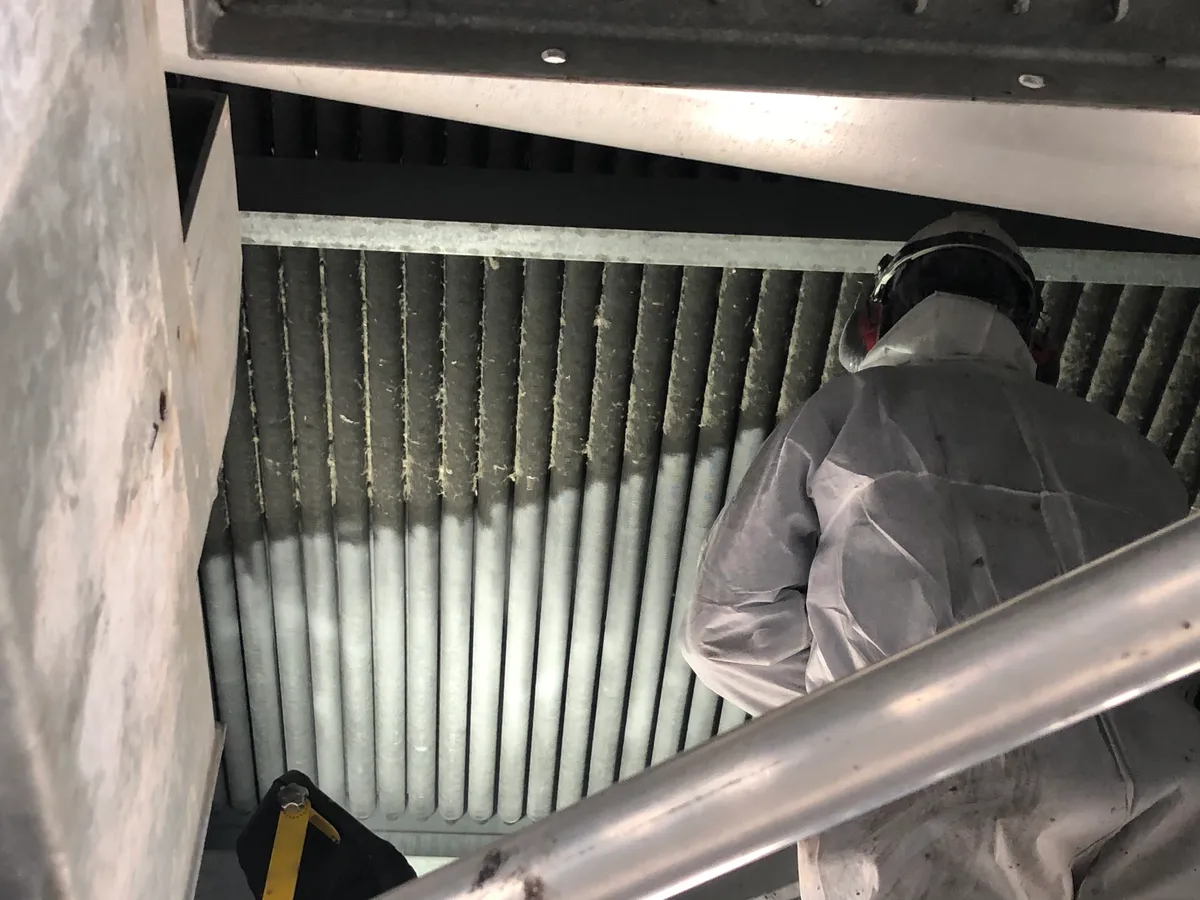
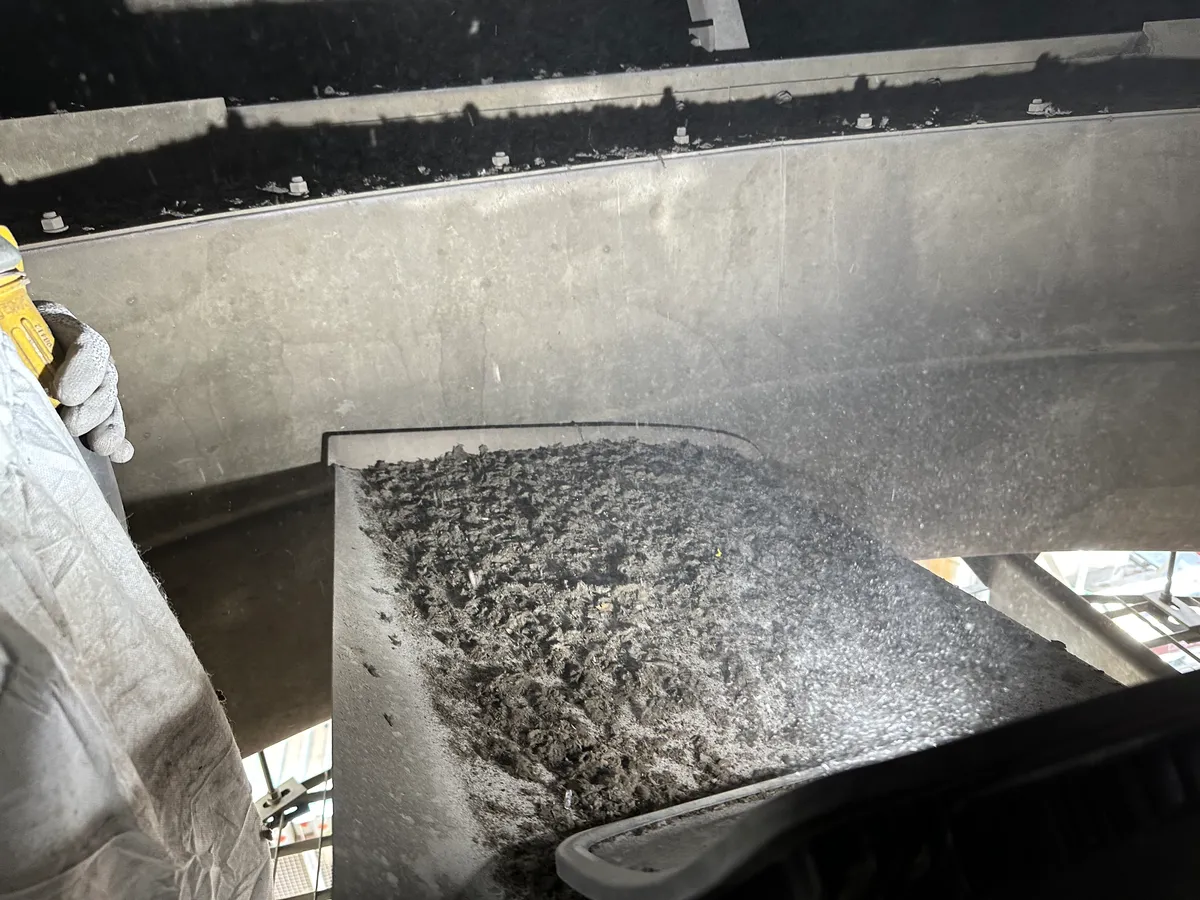
Air cooler NPJ dry cleaning during operation — dust cloud over the finned tubes
15–20%
lower fan energy demand
100 °C+
online cleaning during operation
200 m
working reach
Airflow
near factory condition
Before – After

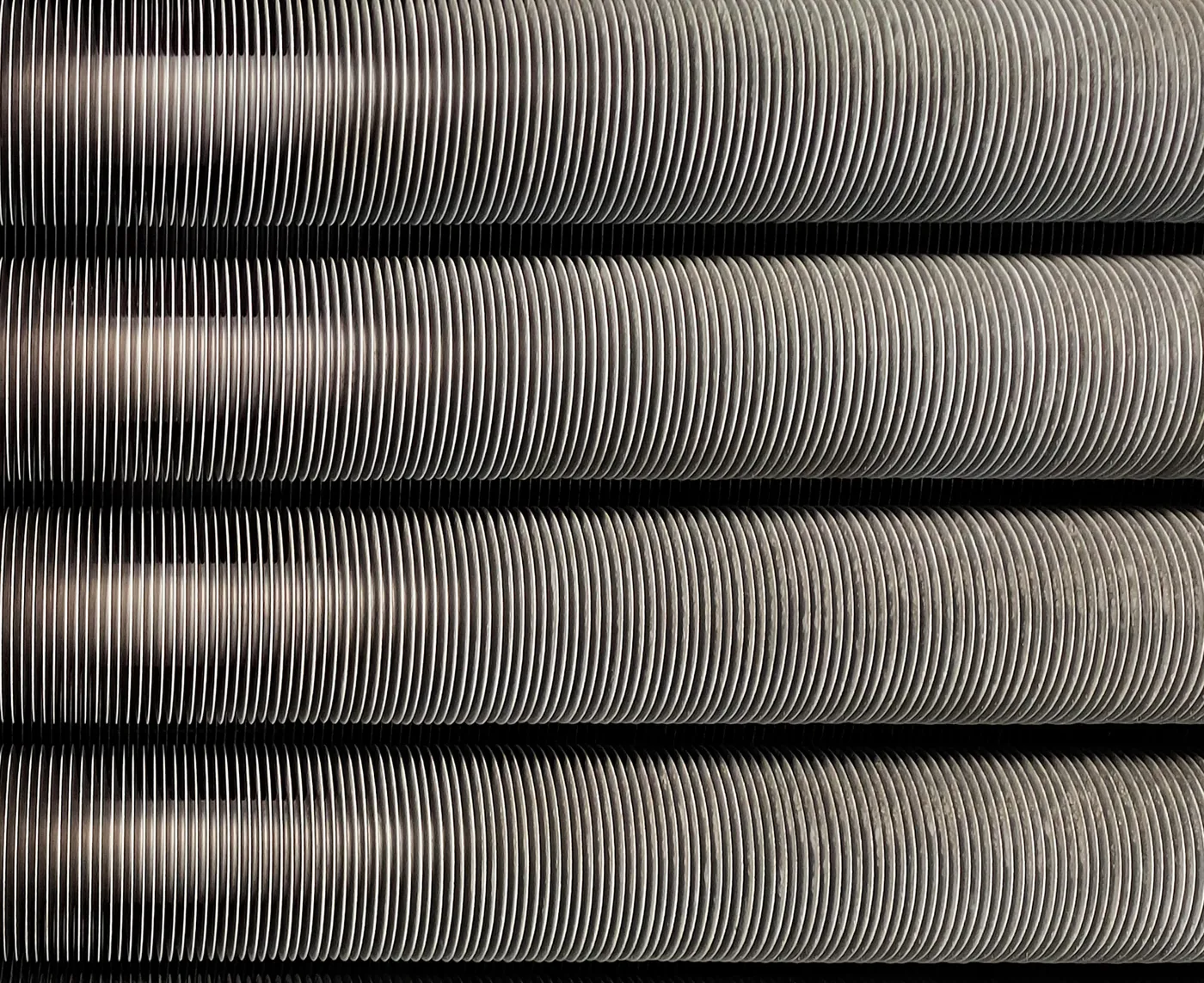
The difference is visible to the naked eye

The same finned tube before and after cleaning. Drag the slider to see what a bare-metal surface means — on request, we verify the efficiency gain with a measurement report.

Request a sample report →
Air cooler finned tube before and after NPJ dry cleaning
Before
After
Tip: the slider can be dragged with mouse or touch.
What you get

Why NPJ dry cleaning

We remove deposits from the external fins of finned-tube air coolers without water, so the cooling system regains its performance — without interrupting production.

  • Performed online, during operation — no shutdown, even above 100 °C
  • No water — no corrosion risk and no wet work area
  • Non-corrosive, biodegradable abrasive — does not damage the fins
  • 15–20% lower fan energy demand with a clean surface
  • Suitable for vertical, horizontal, A-frame and V-frame layouts
  • We reach coolers at heights of up to 150–200 m
  • Self-supporting team — no utilities needed from the plant
  • The thermal insulation (rock wool) stays completely dry
How we work

From survey to report

We work with a self-supporting team: cleaning requires no utilities from the plant, and scaffolding needs are minimal — if any.

Survey and measurement

On-site condition assessment: we record the cooler's baseline performance and the degree of fouling.

Online NPJ cleaning

We clean the finned tubes from below, during operation — without water, using a biodegradable, non-corrosive abrasive.

Verification measurement

After cleaning we repeat the measurement, so the result can be compared in numbers with the baseline.

Report and recommendation

You receive a measurement report with maintenance and cleaning-interval recommendations.

Technology comparison

NPJ dry vs. conventional cleaning methods

Based on our customers' feedback: what used to be a compromise with foam or fire-water washing is the baseline with NPJ.
NPJ dryHigh-pressure waterActive foamDry ice
Can be performed during operationYes, even above 100 °CNoNoLimited
Water consumptionNoneSignificantSignificantNone
Utilities required from the plantNonePlant waterPlant waterNone
Insulation getting soakedImpossibleRiskRiskImpossible
Risk of fin damageZero — with expert executionHighLowHigh
Residual wasteBiodegradable, non-hazardousContaminated waterChemicalsNone
Cleaning efficiencyBare-metal surfacePartialCompromiseSurface-dependent
Typical problems

What we find on air coolers — and why it matters

The most common causes of performance loss are fouling and previous, improper cleaning attempts. These are all photos from our own jobs.
Finned tubes covered with limescale deposits — the result of water spraying Limescale
Limescale from water sprayingWhen cooling falls short and the cooler is sprayed with water: the evaporating water leaves limescale behind, which cements together with dust into an insulating crust on the fins.
Fins bent by high-pressure water washing on an air cooler Improper cleaning
Bent finsThe result of high-pressure water washing: the jet bends the fins and the gaps close up. This damage is permanent — the cooling surface loses performance for good.
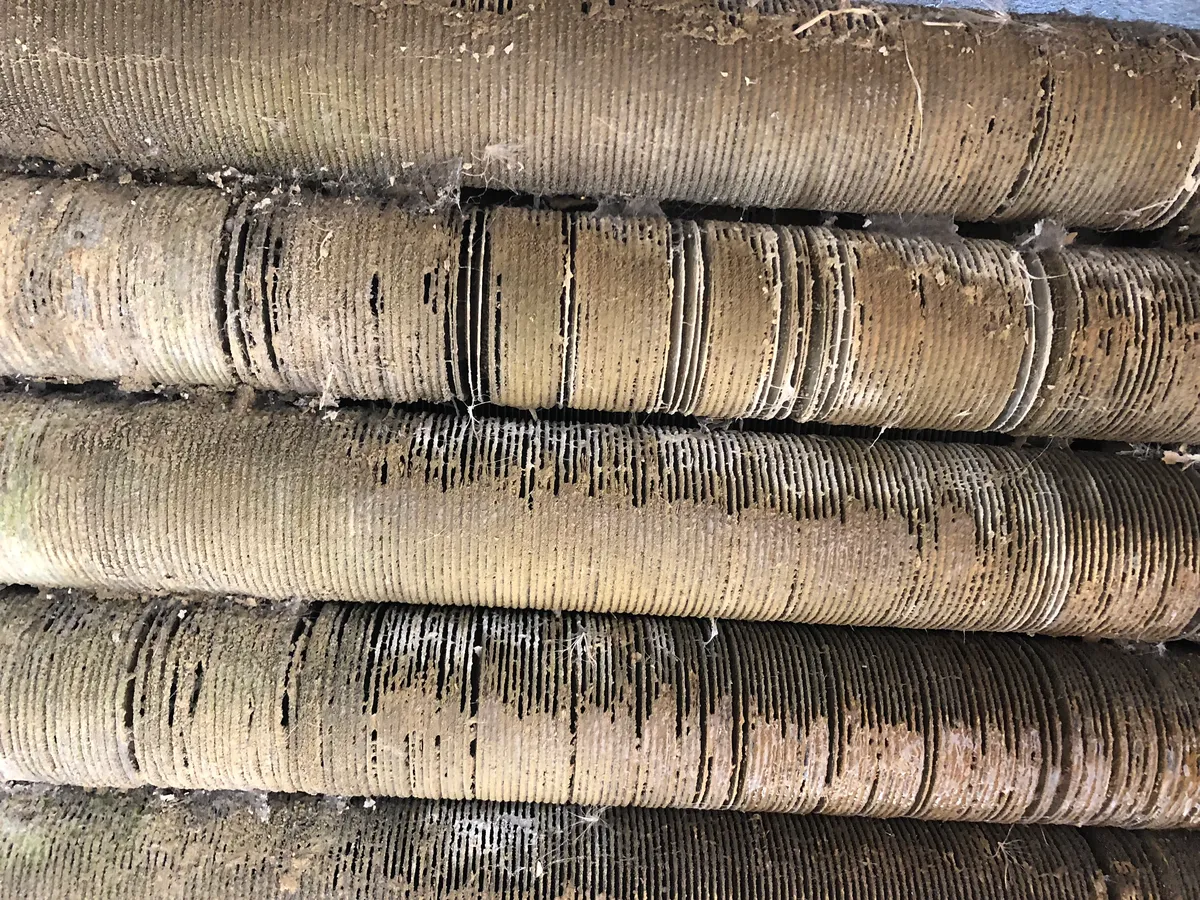
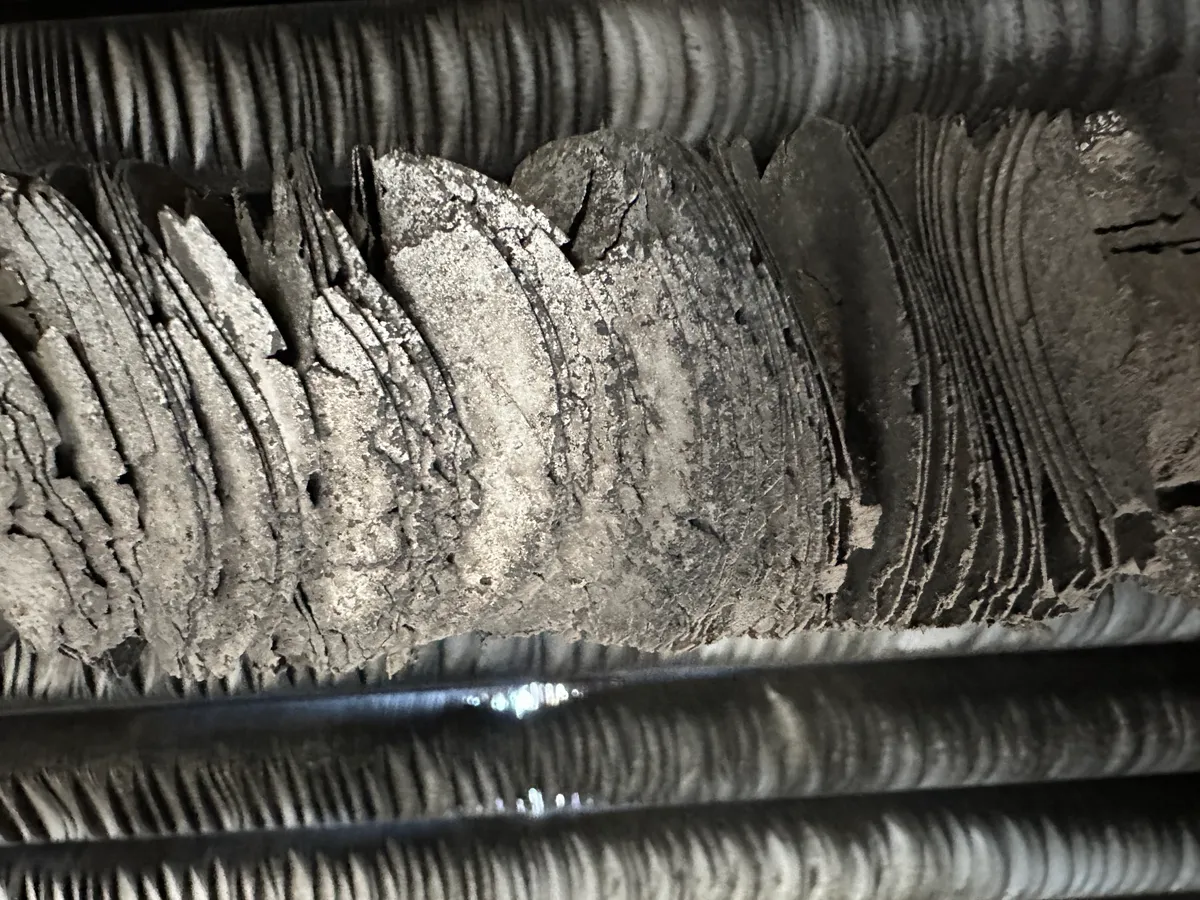
Corroded, crumbling fins on an industrial air cooler — the result of prolonged moisture Corrosion
Corrosion on the finsThe long-term consequence of persistent moisture — water washing and spraying: the fins corrode, crack and crumble. The lost cooling surface cannot be restored — dry cleaning does not feed this process.
Dirt pressed into the tube bundle after improper water cleaning Improper cleaning
Dirt pressed into the bundleWater washing does not remove the dirt — it pushes it deep into the bundle: a dense plug forms in the fin gaps that practically shuts off the airflow.
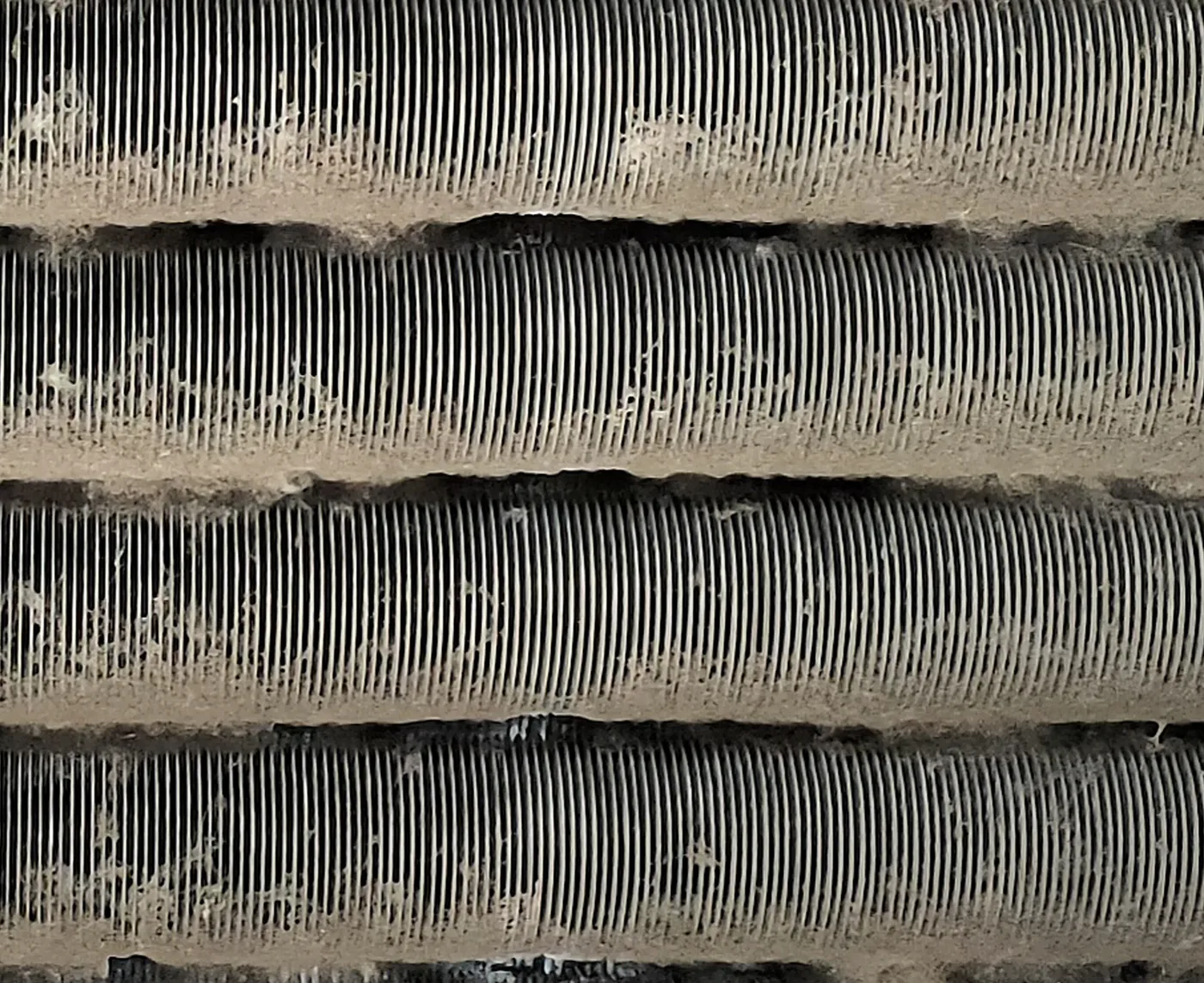
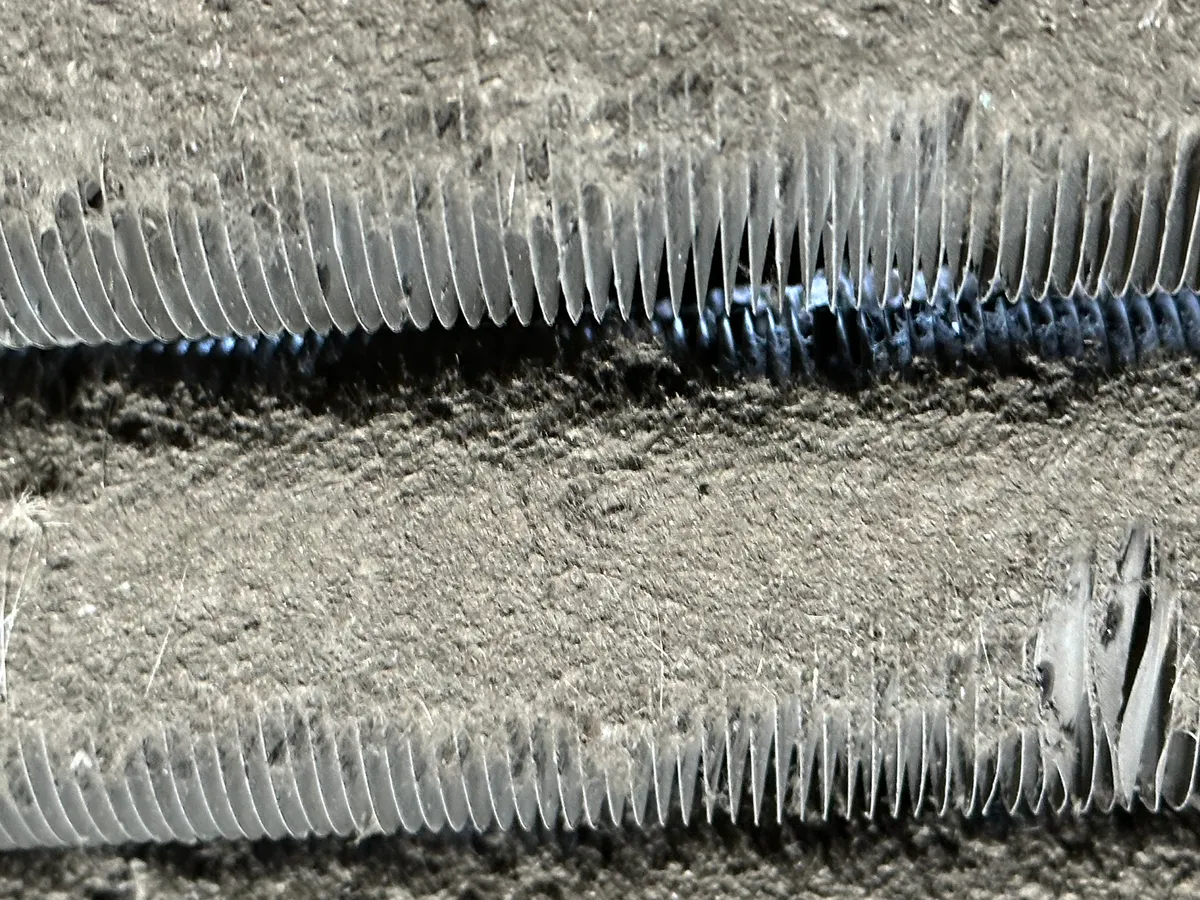
Dust, pollen and lint clogging the fin gaps of an air cooler, with a cleaned strip alongside Fouling
Dust, pollen and lint build-upContamination drawn in from the environment gradually clogs the fin gaps: airflow drops, fan energy demand rises, cooling performance deteriorates.
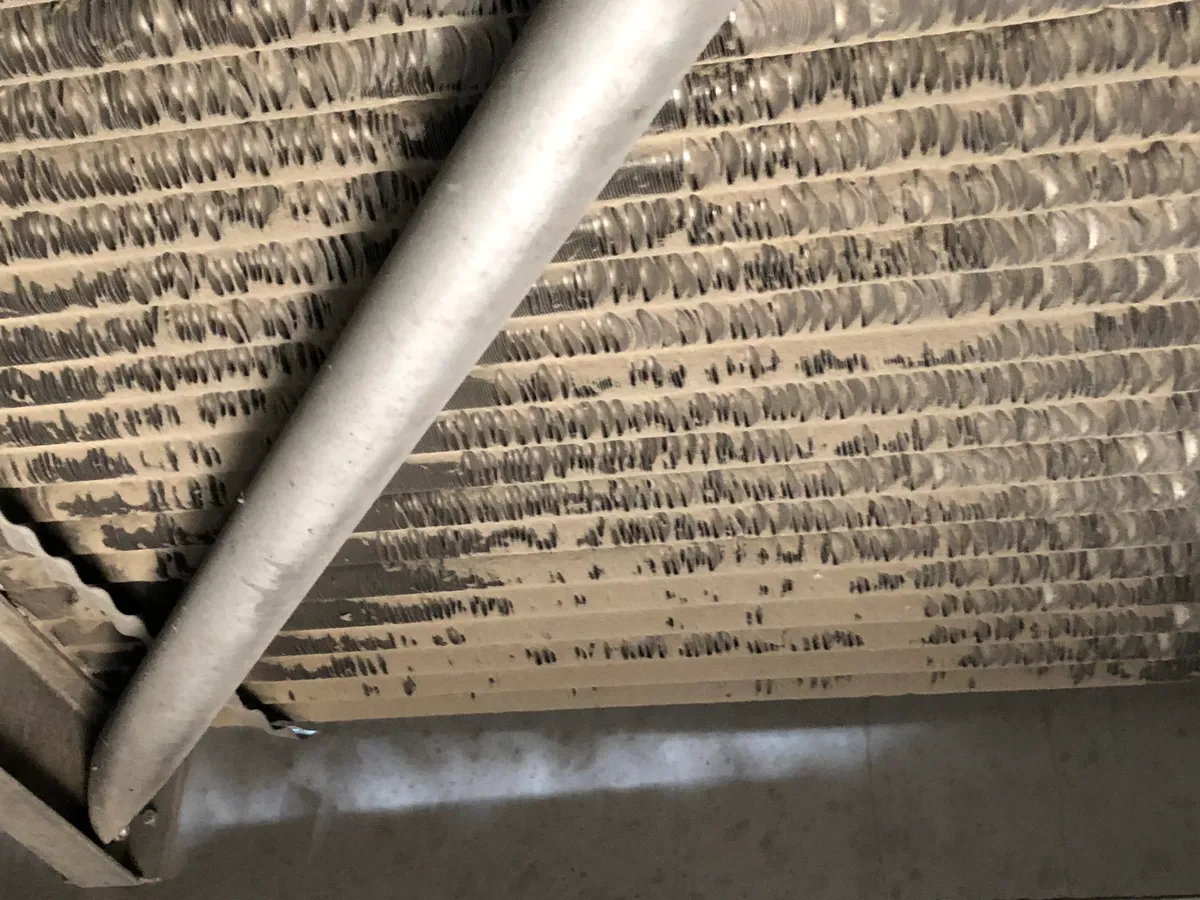
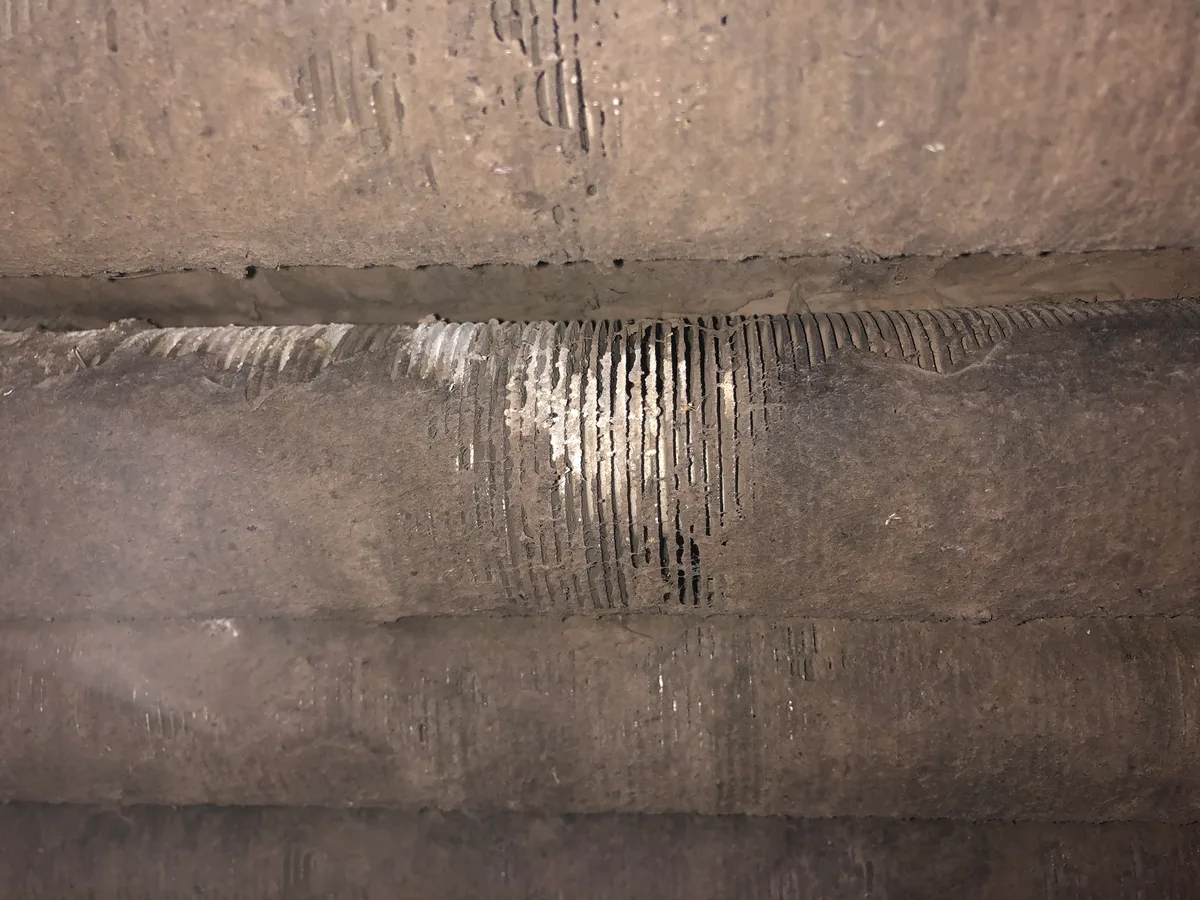
Dust stuck to the fins by condensation on an intermittently operated air cooler — during cleaning Fouling
Dust bonded by condensationOn intermittently operated units, dust stirred up during downtime — for example when nearby fields are ploughed — sticks to the fins as condensation forms, building up into a dense layer. In the photo: mid-cleaning, the boundary is clearly visible.
Dirt extracted from the tube bundle during NPJ dry cleaning
This is what we extractDeposits extracted from the bundleNPJ dry cleaning also extracts previously pressed-in dirt from inside the bundle — the photo shows the amount of material removed from a single cooler. We hand the work area back clean.
Customer feedback

What plant operators say

“We didn't expect such a clean surface. What we had accepted as a compromise with active foam technology — now we've seen a cooler can be much cleaner. I had only ever seen a cooler this clean when it was new.”

Oil refinery · plant management

“The technology makes online cleaning possible even on equipment above 100 °C. If the cooler is clean, the plant doesn't lose 10% of its production capacity.”

Petrochemical plant · maintenance

“The timing was perfect and the team worked to a high standard. The remaining material decomposes — no hazardous waste is left after the work.”

Chemical plant · project management

“It is highly likely that if all air coolers were cleaned with NPJ dry technology, the parameter excursions would stop. These coolers could not be cleaned during operation with any previous technology.”

Refinery · technology

“We used to wash the coolers with fire water, but the efficiency was far below NPJ dry cleaning. All rules were followed, with no HSE issues. I would recommend it to other plants!”

Power plant · maintenance

“Thanks to the dry technology, cleaning the insulation cladding doesn't soak the rock wool. Effective, widely applicable technology — it could even be an alternative to dry ice cleaning.”

Chemical plant · HSE

“The process is visibly effective, confirmed by the measurement results recorded in the report. It can be done in a short time and causes no harmful pollution of the environment.”

Gas storage facility · operations
Where we work

All types of air coolers, EU-wide

In every industry where air cooling is a critical part of production — from refineries to power plants.

Which industries do we clean air coolers in?

In any plant where air cooling can become a production bottleneck — including explosive (ATEX) zones.

  • Oil refineries
  • Underground gas storage, compressor stations
  • Chemical and petrochemical plants
  • Power plants
  • Steel and paper industry
  • Food industry
  • Automotive industry
  • Waste processing facilities

Which cooler types can be cleaned?

NPJ dry cleaning works on every finned-tube, lamellar heat exchanger design — regardless of manufacturer.

  • Air cooled heat exchangers (ACHE, fin-fan coolers)
  • Straight-fin table coolers (GEA, Günther, etc.)
  • Condensers and gas coolers
  • Dry coolers
  • Adiabatic coolers
  • Compressor oil coolers
  • Air cooled condensers (ACC)

Which layouts does it work with?

The cleaning head adapts to every common installation geometry, and we reach coolers at heights of up to 200 m.

  • Vertical ACHE
  • Horizontal air coolers
  • A-frame and V-frame coolers
  • Forced draft designs
  • Induced draft designs
Backed by numbers

A measurement report with every cleaning

We don't make promises — we deliver measurement results. The report covers the measurement and cleaning conditions, a before–after comparison of the cooler's performance, and recommendations for maintenance and the cleaning interval.

Request a sample report →
Sample report / measurement chart placeholder
FAQ

Air cooler cleaning — what engineers ask

Can the air cooler really be cleaned during operation?

Yes. NPJ dry cleaning is performed online, during operation, even on equipment with surface temperatures above 100 °C. No shutdown or production loss is needed.

Won't the fins get damaged during cleaning?

No. The pressure and abrasive combination was developed specifically for finned-tube coolers: it removes only the deposits and does not abrade the base material. The abrasive is non-corrosive and biodegradable.

What does the plant need to provide for the work?

A work permit and an air cooler. We bring everything else: our teams are self-supporting and require no utilities from the plant. With VCA/SCC certification and ATEX-rated equipment we also work in explosive zones.

How much performance improvement can be expected?

With a clean cooling surface the cooler returns to near-factory capacity, and fan energy demand typically drops by 15–20%. We verify the exact value with a measurement report.

How often should air coolers be cleaned?

It depends on the environmental load (dust, pollen, industrial contamination). In the measurement report we provide a site-specific cleaning interval recommendation, typically a 1–3 year cycle.

Is any hazardous waste generated?

No. The abrasive used is environmentally friendly, dissolves in water and decomposes — we hand the work area back clean.

Cooling capacity dropped? Let's clean it — without a shutdown.

Tell us what kind of air cooler you operate — we'll propose an online dry cleaning solution.

Request a quote →
Get in touch
Let's talk

Tell us what you're working with — our engineers will propose the right solution.