
It is usually in the middle of a summer heatwave that plants discover cooling has become the bottleneck: process temperatures creep upwards, the fans run flat out, and there is still not enough cooling capacity. In a large share of cases the explanation is not undersized equipment but something far more mundane: the finned tubes of the industrial air cooler are fouled. In this article we walk through why a fin-fan cooler loses performance, what that costs the plant, and what the options are for air cooler cleaning — including cleaning carried out online, while the unit keeps running.
How does a fin-fan air cooler lose performance?
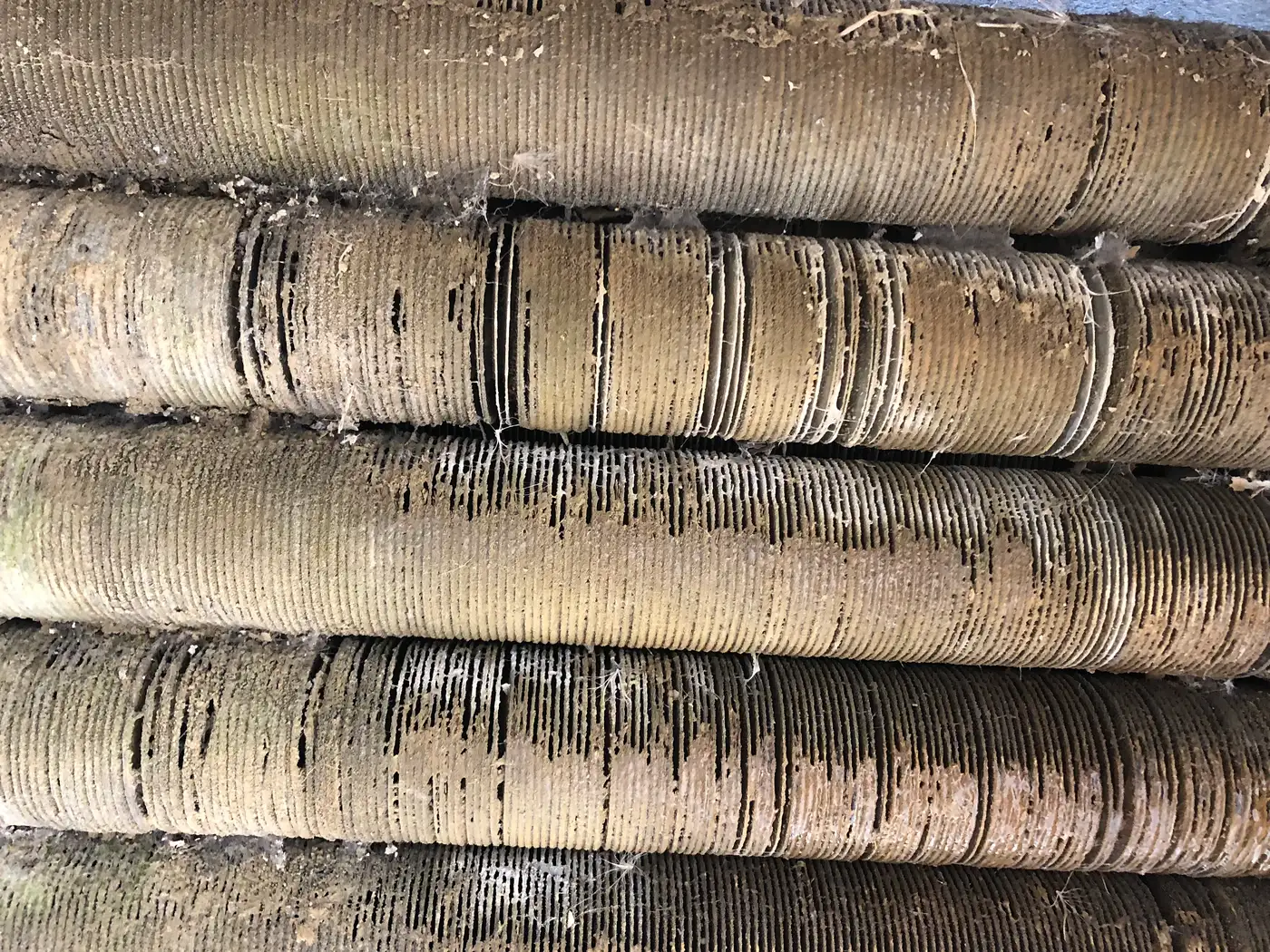
The principle of a finned-tube air cooler (fin-fan cooler) is simple: the heat of the medium flowing in the tubes is transferred to the passing air by thin fins pressed onto the tubes. The huge heat-transfer surface is also the equipment’s weak point — the few-millimetre air gaps between the fins clog up over time.

Dust, pollen and airborne debris
An air cooler effectively works as a giant air filter: dust, spring pollen, poplar fluff and the airborne contamination of an industrial environment settle on the inlet side of the fins. The layer reduces airflow and heat transfer deteriorates.
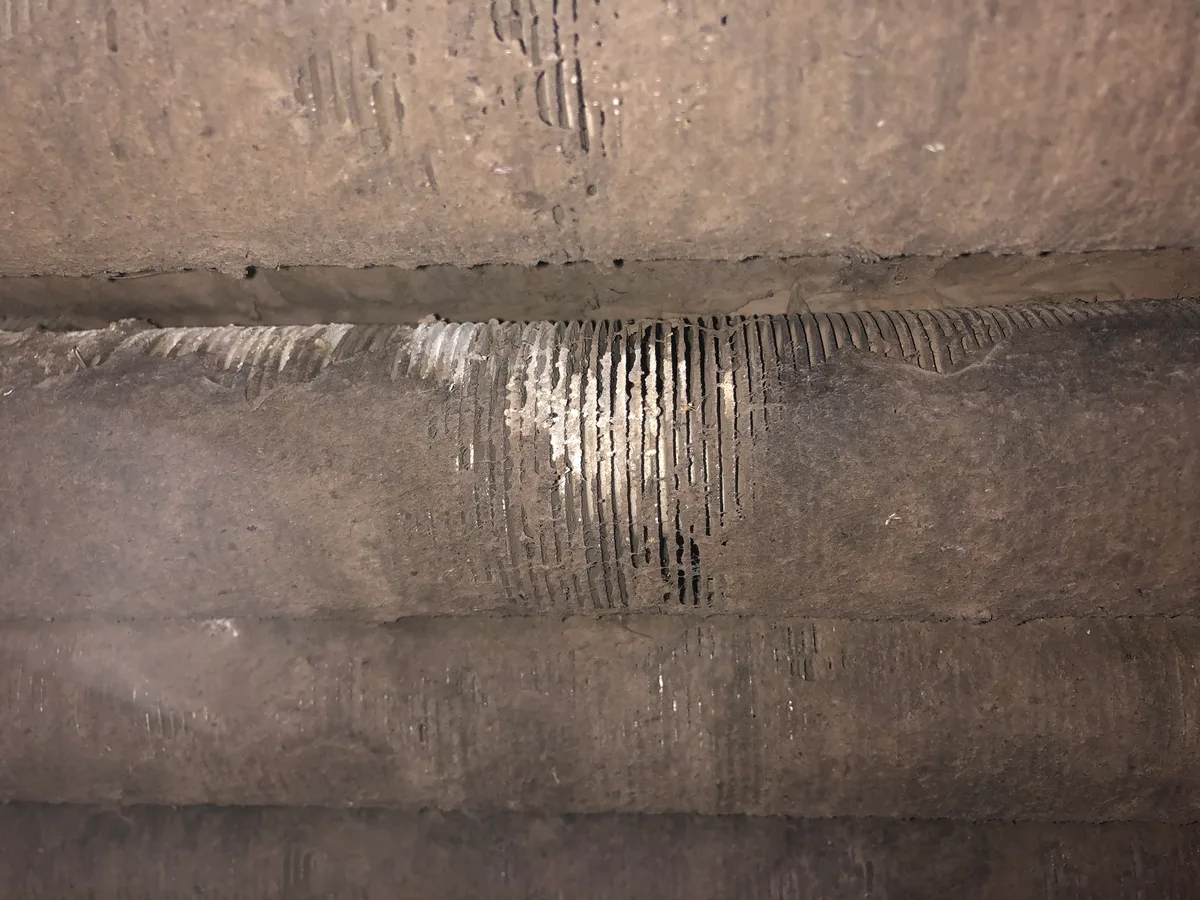
Oily, greasy film
In refinery and chemical-plant environments, hydrocarbon vapours in the air form a thin, sticky film on the fins. This insulates in itself, and it also binds dust — together the two degrade performance at an accelerating rate.
Scale and mineral deposits on the finned tubes
Where spray (adiabatic) pre-cooling is used, or where the unit was previously washed with water, the mineral content of the water sets on the fins as a hard, white layer of scale — in most cases even when treated water is used. Scale that appears on the finned tubes does double damage: it degrades heat transfer as an insulating layer and it narrows the air gap between the fins. Removing it is the most stubborn task in air cooler cleaning.
What does a fouled air cooler cost the plant?
The impact is a measurable physical chain. Clogged fins increase air-side pressure drop, so the fans consume more energy for the same airflow — in our experience fan energy demand typically runs 15–20% higher in a fouled state than with a clean cooler. Deteriorating heat transfer pushes the outlet temperature up, which in summer can mean production curtailment or, in the worst case, an unplanned shutdown. Sustained overload also wears the fan drives faster. The good news: the loss is reversible — with a clean cooling surface the unit returns close to its design capacity, and the improvement is documented in a measurement report.

Cleaning methods: water, chemical, dry
| Aspect | High-pressure water washing | Chemical cleaning | NPJ dry cleaning |
|---|---|---|---|
| Shutdown required? | usually yes | usually yes | no — performed during operation |
| Risk of fin damage | high (bent fins) | medium | low — abrasive developed for finned tubes |
| Against scale | ineffective | good (acid treatment) | effective — without chemicals |
| Waste | contaminated wash water | spent chemical solution | biodegradable, water-soluble medium |
| Water demand | high | medium | none |
High-pressure water washing is the most common method — and it also causes the most damage: the water jet easily bends the thin aluminium fins, causing a permanent increase in air resistance. Chemical cleaning can be effective, but it requires a shutdown, rinsing and waste handling — and the acid also attacks the aluminium itself. The third route is air cooler cleaning during operation, using the dry NPJ process.

Air cooler cleaning during operation: how NPJ dry cleaning works
The essence of NPJ dry cleaning is that it removes deposits in a targeted way, without water or chemicals — while the unit keeps operating, even at surface temperatures above 100 °C. The process in practice:
- Survey: recording the type of deposit and the condition of the cooler.
- Work permit: all the plant needs to provide is a work permit — the crew is self-sufficient and requires no utilities from the site.
- Cleaning during operation: with a non-corrosive, biodegradable abrasive developed for finned tubes — using ATEX-certified equipment, also in explosion-hazard zones.
- Measurement and report: documenting the before/after condition with performance data, on request.
- Clean handover: no hazardous waste is generated.

This solution is most valuable where downtime costs the most: refineries, chemical plants and power stations — exactly where most industrial air coolers operate.
How often should air coolers be cleaned?
There is no universal rule — the environmental load decides. In dusty, pollen-heavy surroundings or hydrocarbon-laden plant air, fouling is faster; in cleaner environments it is slower. In practice a 1–2 year cleaning cycle is typical, but the exact interval should be set per site, based on measurement data. Two tell-tale trends worth monitoring: the process outlet temperature rising at constant load and charge, and increasing fan power draw. If either trend turns upwards, it is time to request a survey.
Frequently asked questions
Can the air cooler really be cleaned without shutting down the unit?
Yes. NPJ dry cleaning is performed online, during operation, even on equipment at temperatures of 100 °C — with no production loss.
Won’t the fins be damaged during cleaning?
No. The abrasive was developed specifically for finned-tube coolers: it removes the fouling without deforming the fins — unlike high-pressure water washing, which easily bends the thin fins.
How much improvement can be expected?
With a clean cooling surface the cooler returns close to its design capacity, and fan energy demand typically drops by 15–20%. The exact figure is documented in a measurement report.
Can scale also be removed from the finned tubes?
Scale and mineral deposits are assessed during the survey: the process can remove the scale, but it is important to check the condition and stiffness of the fins.
Summary
In most cases, air cooler performance loss is not a sizing problem but a fouling problem — and as such, it can be fixed quickly. Plants that survey and clean their coolers before the summer peak face the heatwave with margin, not with curtailment. Request a survey — or read more about air cooler cleaning during operation.